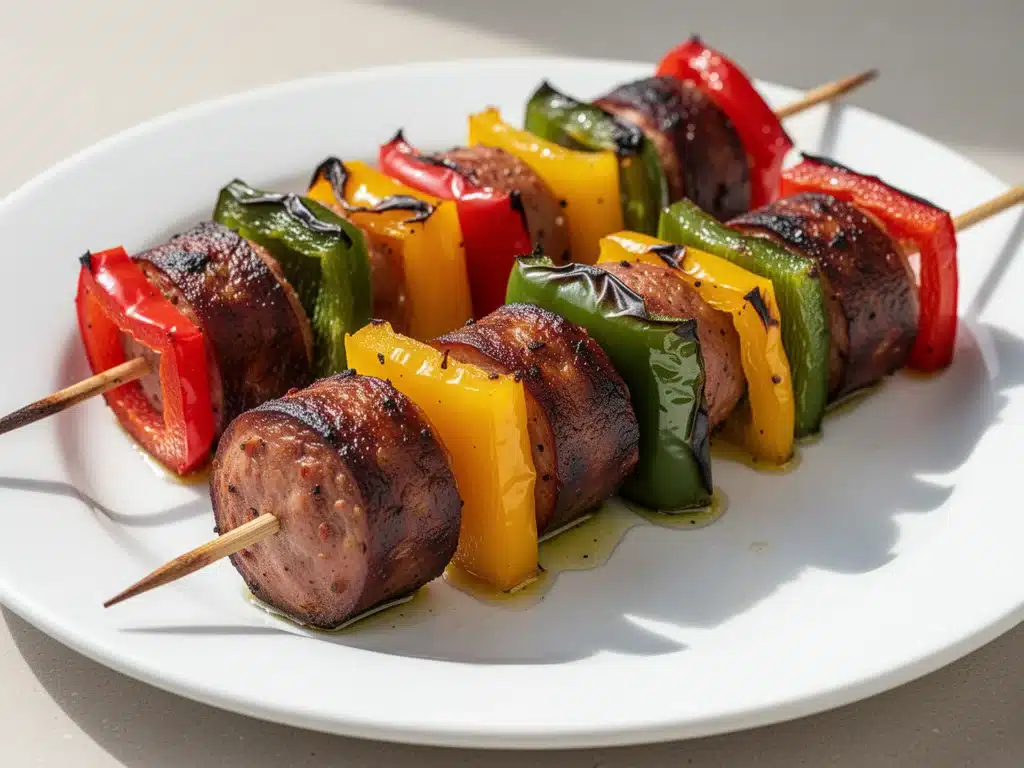
Last July, I stood on my back porch staring at a bag of peppers that were begging to be used. They were softening on the counter, getting wrinkly and sad. I had also bought a pack of smoked sausage because I thought I’d make a fancy pasta dish, but instead, I just grabbed a handful of wooden skewers, some olive oil, and my lighter. I threw everything on the grill without a real plan. I didn’t marinate them. I didn’t measure spices. I just skewered chunks of sausage and peppers and let the fire do its work.
Twenty minutes later, I took a bite. Charred edges on the peppers, juicy smoked sausage, a little bit of smoke flavor that lingered on my fingers. It was better than anything I could have planned. That accidental Tuesday night dinner became the blueprint for what is now my absolute favorite way to handle summer produce and quick proteins. These smoked sausage and peppers skewers are not just a recipe; they are a mood. They are the “I don’t want to spend hours cooking but I still want something delicious” solution that actually delivers.
I’ve made these skewers probably thirty times since that first night. I’ve tried different peppers, different sausages, even different cooking methods. But the simple grilled version? It’s the winner every time. It’s hands-down the easiest summer grilling recipe I know. You don’t need a smoker. You don’t need expensive cuts of meat. You just need a grill (or a grill pan), some basic ingredients, and fifteen minutes of your time. If you’ve been looking for a way to use up those summer veggies without turning your kitchen into a sauna, this is it.
There’s something deeply satisfying about food cooked over an open flame. The smell alone is enough to make my neighbors wander over. And unlike that neapolitan ice cream cake which requires hours of freezing and layering, these skewers go from raw to ready in the blink of an eye. It’s the kind of meal that feels festive and special but requires almost zero effort. Let me walk you through exactly how I make them, so you can stop stressing about dinner and start enjoying your summer.
Why You’ll Love This Skewer Recipe
Okay, so why are these skewers my go-to? Why do I keep coming back to them week after week when there are a dozen other recipes I could try? Here’s the real talk. Because this recipe respects your time and your taste buds equally.
Stupid Simple Prep — Seriously. If you can thread food onto a stick, you can make this. There’s no chopping finely, no complex sauce emulsification, no waiting for dough to rise. I’ve taught my seven-year-old niece how to make these, and she did a better job than I did. It’s just cubes of sausage and chunks of pepper. That’s it. The prep takes less time than it takes to heat up the grill.
One Pan, One Grill, Zero Cleanup Drama — If you’re grilling outside, you just toss the skewers on the grate. If you’re using a grill pan indoors, it’s one pan. No baking sheets, no multiple pots, no weird utensils. Just skewers and a pan. I love that. The last thing I want after a long day is to face a sink full of dishes. This recipe keeps the cleanup to a minimum, which means I spend more time eating and less time scrubbing.
Flavor That Actually Sticks — Smoked sausage already has flavor built in. It’s cured, it’s spiced, it’s ready to eat. When you grill it, that smoke flavor deepens. The peppers caramelize naturally. You don’t need a heavy marinade to make this taste good. The ingredients speak for themselves. I’ve tried adding complex spice rubs, but honestly? Salt, pepper, and a little garlic powder is all you need. The sausage does the heavy lifting.
Perfect for Any Crowd — I’ve served these to my meat-loving brothers, my vegetarian friends (who swap the sausage for halloumi or thick tofu), and my kids who usually pick out the onions. Everyone finds something they like. It’s versatile in a way that most summer recipes aren’t. And unlike a heavy stew or a complicated roast, these feel light enough for a hot night but filling enough to keep you satisfied. They’re the perfect middle ground.
This is my answer to “what’s for dinner” when the weather is nice and I don’t want to fuss. It’s reliable, it’s tasty, and it makes me feel like a competent adult who has their life together, even if I’m wearing sweatpants. You’ll love these because they work every single time.
Ingredients You’ll Need
Here’s the best part: you probably have most of this already in your kitchen. This isn’t a recipe that requires a trip to three different specialty stores. It’s built on pantry staples and fresh produce. I’m particular about a couple of things here, specifically the sausage and the peppers, but I’ll tell you exactly why.
Smoked Sausage (1 pound / 450g) — This is the star. I prefer Andouille or Kielbasa. Andouille gives you that spicy, Cajun kick that pairs beautifully with sweet peppers. Kielbasa is milder and garlic-forward, which is great if you have picky eaters. Avoid raw sausages; you want fully cooked, pre-smoked sausage. It saves time and ensures safety. I buy the vacuum-sealed packs from the deli section.
Bell Peppers (3 large / about 600g) — Don’t just grab green peppers. I use a mix of red, yellow, and orange. They’re sweeter and look gorgeous on the plate. Red peppers get jammy and sweet, yellow peppers stay bright, and orange adds a nice mid-tone. If you only have green, it works, but it’ll be more bitter. Try to get at least two colors for visual appeal.
Red Onion (1 medium / about 150g) — Red onion holds up better on the grill than white or yellow. It gets tender and sweet without falling apart. If you’re sensitive to raw onion bite, the grilling process mellows it out significantly. Just cube it similarly to the peppers.
Red Wine Vinegar (2 tablespoons / 30ml) — This is the secret weapon. It’s not a marinade; it’s a finisher. A splash of vinegar right before serving cuts through the richness of the sausage and brightens the whole dish. I use a decent red wine vinegar. Balsamic works too, but it changes the flavor profile to be sweeter. Stick to red wine for that sharp, clean bite.
Extra Virgin Olive Oil (3 tablespoons / 45ml) — You need this to coat the veggies and prevent sticking. Don’t skimp. The oil helps the spices stick and promotes even charring. I use a mid-range olive oil. You don’t need the fancy $20 bottle, but don’t use the cheap stuff either.
Garlic Powder (1 teaspoon) — Fresh garlic burns easily on a grill. Garlic powder stays put and gives you that savory background note without the risk of bitter charred bits. I keep a shaker of this everywhere.
Italian Seasoning (1 teaspoon) — A little dried oregano, basil, and thyme. It’s a quick way to add herbal notes. If you have fresh herbs, you can use them, but dried holds up better to the heat.
Salt and Black Pepper — To taste. Since the sausage is already salty, go easy on the salt. I usually add a light pinch to the peppers and onions, but skip it on the sausage.
Wooden Skewers (8-10 skewers) — If you’re using wood, you MUST soak them. I soak mine in water for at least 30 minutes before grilling. This prevents them from catching fire. Bamboo skewers work great. Metal skewers are fine too, but they conduct heat and can burn your mouth if you’re not careful.
Optional: Fresh Parsley — Chopped, for garnish. It adds a pop of green and freshness. I like it, but it’s not essential. I use it when I’m feeling fancy.
Equipment Needed
You don’t need fancy equipment for this. Here’s what I actually use in my kitchen.
Grill — A charcoal grill gives the best flavor, but a gas grill works perfectly fine. I use my gas grill for convenience on weeknights. If you don’t have an outdoor grill, a cast-iron grill pan works wonders on the stovetop. It gives you those nice grill marks and smoky flavor without leaving your house.
Large Bowl — For tossing the peppers and onions with oil and spices. Any bowl will do. I use a stainless steel one because it’s durable and easy to clean.
Sharp Knife — For cutting the sausage and peppers. A dull knife is dangerous and makes uneven cuts. I use my chef’s knife for everything. Even cuts mean even cooking, which is crucial for skewers.
Cutting Board — I use a large plastic one. It’s easy to sanitize and doesn’t dull my knives as quickly as wood.
Skewers — As mentioned, wooden or metal. Wooden needs soaking. Metal needs oiling to prevent sticking.
Tongs — For flipping the skewers on the grill. Forks pierce the food and let juices out. Tongs grip gently and keep everything moist. I have a pair of long-handled tongs that keep my hands safe from the heat.
Plate — For serving. I usually serve these family-style, with a big platter in the middle. It looks rustic and inviting.
How to Make It: Step-by-Step
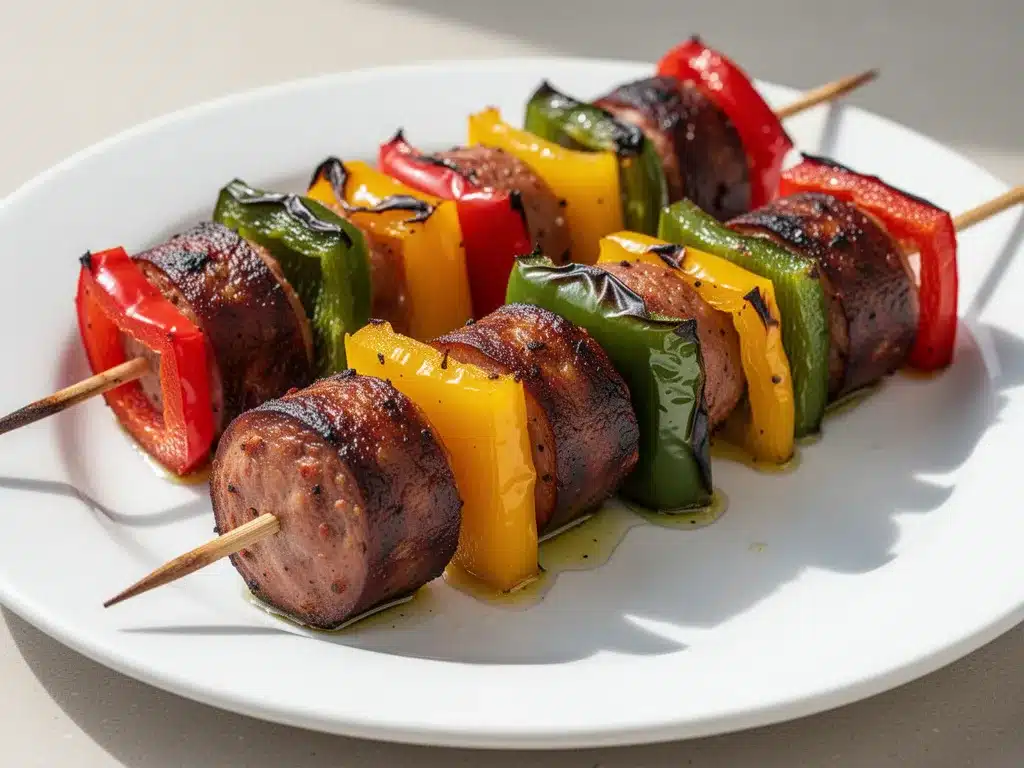
Alright, let’s make this! I’m walking you through exactly how I do it, including the little tricks I’ve picked up over the years. This process is straightforward, but attention to detail makes the difference between good and great.
Step 1: Soak Your Skewers (30+ minutes before cooking)
If you’re using wooden skewers, this is non-negotiable. Fill a bowl with water and submerge the skewers. Let them sit for at least 30 minutes. If you forget this step, your skewers will catch fire on the grill, and you’ll be left with burnt sausage and sad peppers. I usually soak them when I start prepping the veggies, so they’re ready by the time the grill is hot. If you’re using metal skewers, you can skip this, but give them a quick wipe with oil to prevent sticking.
Step 2: Prep the Vegetables
Wash your bell peppers and red onion. Cut off the stems, remove the seeds and white membranes, and chop them into 1-inch cubes. Try to keep the sizes consistent. If some pieces are huge and others are tiny, the small ones will turn to mush before the big ones are tender. I aim for uniform cubes. This ensures everything cooks at the same rate. Place the chopped veggies in a large bowl.
Step 3: Cut the Sausage
Take your smoked sausage and cut it into 1-inch thick rounds, then slice each round into quarters. You want bite-sized pieces that are easy to eat. If the sausage is very thick, you might want to halve the quarters. I like chunks that are slightly larger than the pepper cubes, so they stand out on the skewer. Place them on a separate plate. Don’t mix them with the veggies yet.
Step 4: Season the Veggies
Drizzle the olive oil over the peppers and onions. Sprinkle with garlic powder, Italian seasoning, salt, and black pepper. Toss everything gently until the veggies are evenly coated. You want them shiny but not swimming in oil. This seasoning mix is key. The garlic powder and Italian herbs will infuse the veggies as they grill. Taste a raw piece of pepper with a pinch of salt to check the seasoning balance. Adjust if needed.
Step 5: Assemble the Skewers
Now for the fun part. Thread the ingredients onto the skewers. I like to alternate: sausage, pepper, onion, sausage, pepper, onion. This ensures you get a bit of everything in each bite. Leave a little space between pieces so heat can circulate. Don’t pack them too tightly. If they’re squished together, they’ll steam instead of grill. Aim for about 4-5 pieces per skewer. It’s not an exact science, so just make them look nice and fit on your grill grate.
Step 6: Preheat the Grill
Heat your grill to medium-high heat. About 375-400°F (190-200°C). You want it hot enough to char the outside quickly but not so hot that the inside stays raw. If using a charcoal grill, wait until the coals are covered in gray ash. If using gas, turn all burners to high, then reduce to medium-high once hot. Clean the grates with a brush to remove any debris. Oil the grates lightly with a paper towel dipped in oil to prevent sticking.
Step 7: Grill the Skewers
Place the skewers on the grill. Close the lid. Cook for 8-10 minutes, turning every 2-3 minutes. You want even charring on all sides. The peppers should have some blackened spots, and the sausage should get crispy edges. Don’t rush this. If you turn them too often, they won’t get those nice grill marks. If you don’t turn them enough, they’ll burn on one side. Listen for the sizzle. It should be a vigorous sizzle, not a quiet hum. When they’re done, the peppers should be tender-crisp, and the sausage should be heated through.
Step 8: Finish and Serve
Remove the skewers from the grill. While they’re still hot, drizzle with red wine vinegar. This is the moment where the flavors come together. The vinegar cuts the richness. Sprinkle with fresh parsley if you’re using it. Serve immediately. These are best eaten hot, right off the grill. They lose their charm if they sit out too long.
Expert Tips & Tricks
Here’s everything I’ve learned from making these dozens of times. These tips will save you from my mistakes.
Uniform Cuts Are Everything — I cannot stress this enough. If your pepper cubes are different sizes, your cooking times will be off. I use a ruler once (okay, maybe twice) to ensure consistency. It’s worth the extra minute. Even cooking means better texture.
Don’t Overcrowd the Grill — If you have too many skewers, cook in batches. Overcrowding lowers the grill temperature and steams the food. You want direct contact with the hot grate for that char. I usually cook in two batches. It’s faster than waiting for the grill to recover temperature.
Soak Skewers Longer Than You Think — 30 minutes is the minimum. If I’m planning ahead, I soak them for an hour. Dry wood catches fire fast. Wet wood smolders safely. I’ve lost skewers to flames, and it’s not fun. Better safe than sorry.
Use Tongs, Not Forks — Piercing the sausage with a fork lets the juices escape. You want those juices inside the sausage for moisture. Tongs keep everything sealed. It’s a small detail that makes a big difference in taste.
Acid is Your Friend — The red wine vinegar at the end is crucial. Without it, the dish can feel heavy. The acid brightens everything up. If you don’t have red wine vinegar, lemon juice works too. But red wine vinegar has a depth that complements the smoked sausage perfectly.
Grill Pan Alternative — If it’s raining or you’re stuck inside, a cast-iron grill pan is your best friend. Heat it until it’s screaming hot. Add a little oil. Cook in batches. It’s not the same as open flame, but it’s close enough. I’ve made these on my stovetop many times, and they’re still delicious.
Variations & Substitutions
Once you’ve nailed the basic version, here’s how you can mix it up. I’ve tried all of these, and they all work in their own way.
Spicy Version — Swap regular smoked sausage for chorizo or spicy Andouille. Add a pinch of cayenne pepper to the vegetable seasoning. If you like heat, this is the way to go. The spice pairs beautifully with the sweet peppers.
Veggie-Heavy — Add zucchini or yellow squash chunks. They grill up nicely and add volume. I use equal parts veggies to sausage. It’s lighter and great for summer lunches.
Chicken Swap — Use grilled chicken breasts cut into cubes instead of sausage. Marinate the chicken in olive oil, lemon, and herbs before skewering. It’s a leaner option. I do this when I want something lighter. Cook time is similar, but check for doneness.
Italian Style — Use Italian sausage (mild or hot). Add marinated artichoke hearts to the skewers. Top with a drizzle of balsamic glaze instead of vinegar. It’s richer and more complex. This version feels like an appetizer at an Italian restaurant.
Gluten-Free — Most smoked sausages are gluten-free, but check the label. Some contain fillers. Use gluten-free skewers (wood or metal). This recipe is naturally gluten-free if you verify your sausage.
Dairy-Free — This recipe is already dairy-free. No cheese or butter involved. Just sausage, veggies, oil, and vinegar. Perfect for dairy-free diets.
Serving & Storage
How to serve these to make them look and taste their best.
Side Dishes — These skewers are hearty, but they pair well with light sides. A simple arugula salad with lemon vinaigrette is perfect. Or grilled corn on the cob. I also like them with crusty bread to soak up the juices. If you’re serving a crowd, add a potato salad. But keep it simple. The skewers are the star.
Appetizer vs. Main — These work as both. For appetizers, use smaller skewers with 3 pieces each. For mains, use larger skewers with 5-6 pieces. I usually serve 3-4 skewers per person as a main, depending on the sides.
Storage — Store leftovers in an airtight container in the fridge for up to 3 days. The flavors meld together, so they actually taste better the next day. The sausage gets more infused with the pepper flavors. It’s still good, just different.
Reheating — Reheat in a skillet over medium heat with a splash of water. Cover and steam for 2-3 minutes. This keeps them moist. Microwave reheating can make the sausage rubbery. If you must microwave, do it in short bursts and add a little water. I prefer the skillet method for best texture.
Freezing — I don’t recommend freezing these. The peppers get mushy when thawed, and the sausage texture changes. It’s best enjoyed fresh. Make a batch, eat it, and enjoy the leftovers for a few days.
Nutrition Information
I’m not a nutritionist, but here’s the breakdown if you’re tracking. This is per serving based on 4 servings (2 skewers each).
Calories: 320
Protein: 18g
Carbs: 12g
Fiber: 3g
Sugar: 6g
Fat: 22g
Sodium: 680mg
What’s Good: High protein from the sausage. Good fiber from the peppers and onions. Low carb if you skip the bread. It’s a balanced meal with veggies and protein.
What to Know: Higher in sodium due to the smoked sausage. If you’re watching salt, look for low-sodium sausage options or rinse the sausage before cooking. The fat content is moderate, mostly from the sausage and olive oil. It’s not a diet food, but it’s not excessive either. Enjoy it as part of a varied diet.
Final Thoughts
So that’s my smoked sausage and peppers skewers! I’ve probably talked your ear off at this point, but when you make a recipe this often, you have a lot to say about it. This has saved my summer dinners more times than I can count. It’s my answer to “what’s for dinner” when I’m tired, the weather is nice, and I don’t want to order takeout. My family loves it, my friends ask for the recipe, and I’m happy because it’s easy and delicious.
Make it yours! Try different peppers, swap the sausage, add some spice. The best recipes are the ones you adapt to your tastes. If you make this, drop a comment and let me know what you think! I love hearing how recipes turn out in your kitchen. And if something doesn’t work, tell me that too—I’m here to help troubleshoot. Happy grilling! I hope your backyard smells amazing.
Frequently Asked Questions
Can I use fresh sausage instead of smoked?
You can, but you’ll need to cook it thoroughly. Smoked sausage is pre-cooked, so it just needs heating through. Fresh sausage needs to reach 160°F internally. I recommend using a thermometer. Also, fresh sausage lacks that smoky flavor, so you might want to add smoked paprika to the seasoning. Smoked sausage is easier and tastier for this specific recipe.
Why did my skewers stick to the grill?
Usually, this means the grill wasn’t hot enough when you started, or the grates weren’t oiled. Heat the grill well, brush the grates clean, and oil them with a high-smoke-point oil (like canola or vegetable) before placing the skewers. Also, don’t try to flip them too early. Let them sear for 2-3 minutes before turning. They’ll release naturally when ready.
Can I make these in the oven?
Yes! Preheat your oven to 400°F (200°C). Place the skewers on a baking sheet lined with foil. Bake for 15-20 minutes, flipping halfway through. They won’t have the same char as grilled, but they’re still delicious. This is a great option if you don’t have a grill or live in an apartment.
How do I prevent the wooden skewers from burning?
Soak them in water for at least 30 minutes before grilling. This saturates the wood and prevents it from catching fire. If you see smoke, it’s working. If you see flames, you soaked them for too short a time. Next time, soak them for an hour. Metal skewers are an alternative if you’re worried about this.
Can I prep these ahead of time?
Yes! You can cut the veggies and sausage and store them in separate containers in the fridge for up to 24 hours. Assemble the skewers just before grilling. If you assemble them too early, the veggies might release water and make the skewers soggy. Keep them separate until you’re ready to cook.
What kind of vinegar works best?
Red wine vinegar is my top choice because it’s sharp and complements the smoked sausage. Balsamic vinegar works too but adds sweetness. Apple cider vinegar is milder. Lemon juice is a good substitute if you don’t have vinegar. Avoid white vinegar; it’s too harsh and acidic for this dish.
Can I add onions to the skewers?
Absolutely. Red onion is best because it’s sweeter and holds up well. Yellow or white onion can work, but they might fall apart. Cut the onion into similar-sized cubes as the peppers. If you’re sensitive to onion, you can skip it, but it adds a nice flavor layer.
Pin This Recipe!
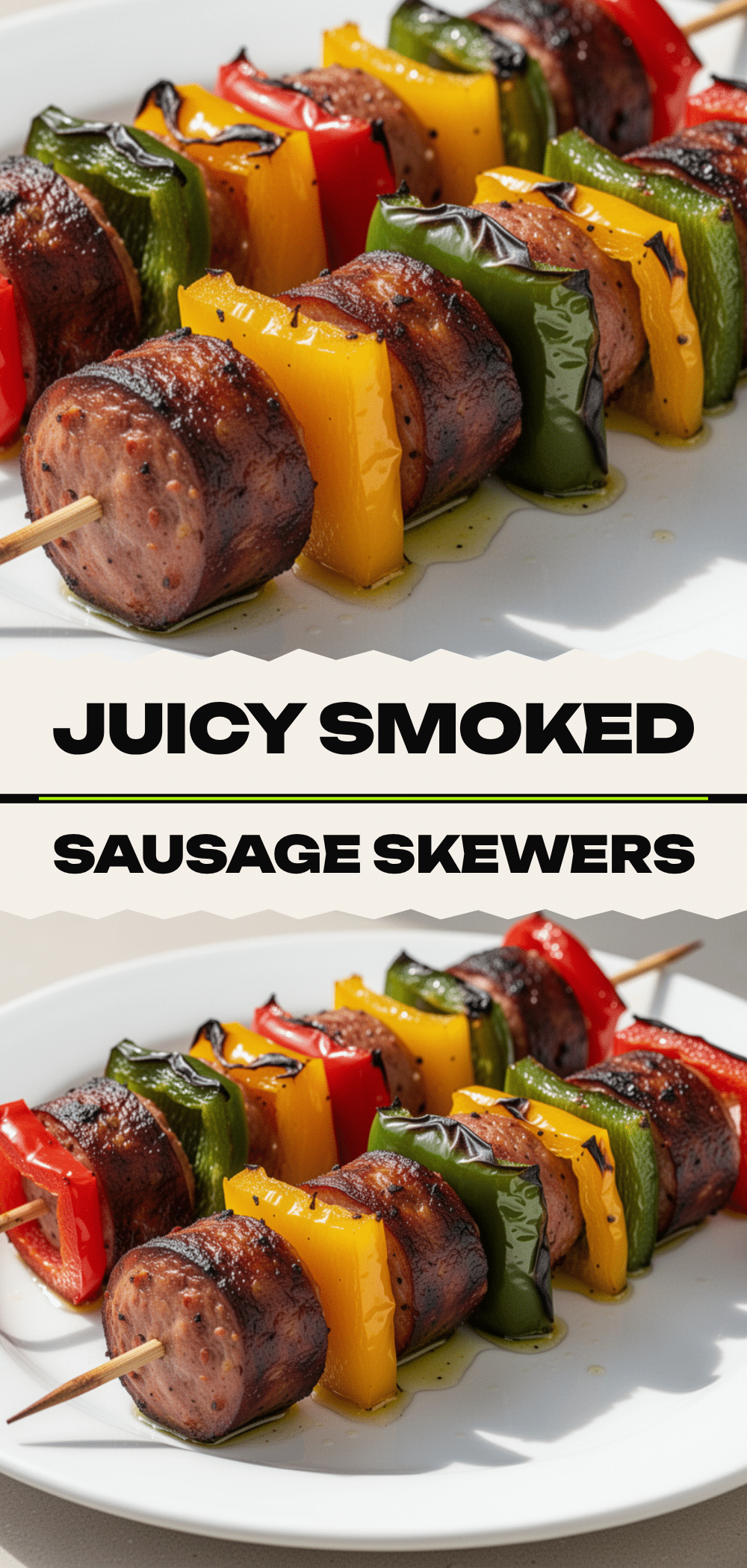
Smoked Sausage and Peppers Skewers: Easy Summer Grilling
- Total Time: 25 minutes
- Yield: 4 servings 1x
Description
A simple, flavorful summer grilling recipe featuring chunks of smoked sausage and bell peppers threaded onto skewers. This dish requires minimal prep, offers zero cleanup drama, and delivers charred, juicy results in just 15 minutes.
Ingredients
- 1 pound (450g) smoked sausage (Andouille or Kielbasa), cut into 1-inch chunks
- 3 large bell peppers (red, yellow, orange), cut into 1-inch cubes
- 1 medium red onion, cut into 1-inch cubes
- 3 tablespoons extra virgin olive oil
- 1 teaspoon garlic powder
- 1 teaspoon Italian seasoning
- Salt and black pepper to taste
- 8–10 wooden skewers (soaked in water for 30+ minutes)
- 2 tablespoons red wine vinegar
- Fresh parsley, chopped (optional, for garnish)
Instructions
- Soak wooden skewers in water for at least 30 minutes to prevent burning.
- Wash and chop bell peppers and red onion into uniform 1-inch cubes. Place in a large bowl.
- Cut smoked sausage into 1-inch thick rounds, then slice into quarters or bite-sized chunks.
- Drizzle olive oil over the vegetables. Sprinkle with garlic powder, Italian seasoning, salt, and black pepper. Toss to coat evenly.
- Thread ingredients onto skewers, alternating between sausage, peppers, and onions. Leave small gaps between pieces for even cooking.
- Preheat grill to medium-high heat (375-400°F / 190-200°C). Clean and oil the grates.
- Grill skewers for 8-10 minutes, turning every 2-3 minutes, until peppers are tender-crisp and sausage has crispy edges.
- Remove from grill and immediately drizzle with red wine vinegar. Garnish with fresh parsley if desired and serve hot.
Notes
Ensure vegetable cuts are uniform for even cooking. Do not overcrowd the grill; cook in batches if necessary. If using wooden skewers, soaking is mandatory to prevent fire. For a spicy version, use chorizo or add cayenne pepper. Leftovers can be stored in the fridge for up to 3 days.
- Prep Time: 15 minutes
- Cook Time: 10 minutes
- Category: Main Course
- Cuisine: American
Nutrition
- Serving Size: 2 skewers per servin
- Calories: 320
- Sugar: 6
- Sodium: 680
- Fat: 22
- Saturated Fat: 7
- Carbohydrates: 12
- Fiber: 3
- Protein: 18
Keywords: smoked sausage, peppers, skewers, grilling, summer recipes, easy dinner, outdoor cooking, quick meals, gluten-free, dairy-free