Last November, I came home from work feeling like my bones had turned to lead. It wasn’t just tiredness; it was that heavy, hollow kind of exhaustion where you don’t even want to talk, let alone cook. I stood in my kitchen for ten minutes, staring at the empty fridge, wondering if I should just eat a handful of crackers over the sink. But I knew that wouldn’t fix anything. I needed warmth. I needed something that would sit in my stomach and tell me, it’s okay, you’re safe now.
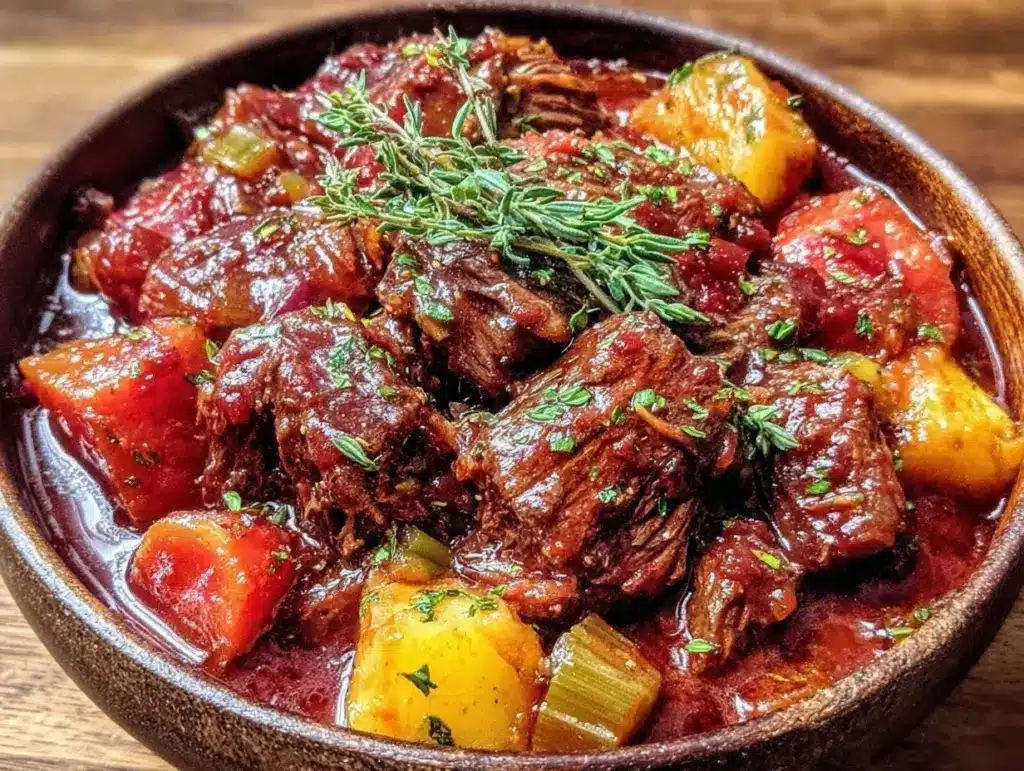
So, I made this Cozy Slow Cooker Beef Stew with Red Wine. I didn’t chop vegetables with precision. I didn’t measure spices with a tiny spoon. I just threw things in, trusting that the slow cooker would do the heavy lifting while I took a long, hot shower and finally let my shoulders drop. By the time I pulled the lid off an hour later, the smell of thyme and rich beef had filled the house, wrapping around me like a weighted blanket.
I sat at my small table with a bowl that was too big for just me, spooning up tender chunks of beef and potatoes that melted on my tongue. That bowl of Cozy Slow Cooker Beef Stew with Red Wine didn’t just feed me; it reset my nervous system. It was the quietest, most nourishing thing I could have done for myself that evening.
This recipe has become my sanctuary. It’s not about impressing anyone. It’s not about efficiency or meal-prepping for a week of chaos. It’s about giving yourself permission to slow down. The Cozy Slow Cooker Beef Stew with Red Wine does the work while you do you. It’s the one to make when you need to take care of yourself, when the world feels too loud, and you just need a little warmth to remind you that you’re still here, still breathing, still capable of creating something good.
Why You’ll Love This Self-Care Stew
There’s a specific magic in how this Cozy Slow Cooker Beef Stew with Red Wine comes together. It’s not just dinner; it’s a pause button on your day. Here’s why this bowl of comfort keeps me coming back, especially on the hard days:
- Set It and Forget It — The real talk? I often make this when I’m mentally checked out. You spend ten minutes chopping and dumping ingredients into the pot, then you walk away. No stirring, no watching the stove, no anxiety. The slow cooker handles everything while you read, nap, or just breathe.
- Red Wine Deepens the Flavor — This isn’t just beef broth. The red wine (a simple, dry Cabernet or Merlot works perfectly) adds a depth of flavor that feels expensive but costs almost nothing. It makes the stew taste like it simmered for hours, even though it’s just doing its thing in the background.
- Tender Beef Every Time — I’ve tried quick-cook methods, and the beef is always tough. But in the slow cooker, the connective tissue breaks down completely. The beef becomes fork-tender, practically falling apart. It’s the kind of texture that makes you savor every bite.
- Comfort in a Bowl — There’s something primal about warm, savory stew on a cold day. It grounds you. The thyme, the bay leaves, the carrots and celery—they create a flavor profile that feels like a hug. It’s nourishing in a way that fast food never is.
- Perfect Leftovers — This tastes even better the next day. I often make a small batch for myself, saving the rest for a later rainy afternoon. It reheats beautifully, becoming even more cohesive and flavorful.
This is my go-to when dinner needs to just work, but more importantly, when I need to feel cared for. It’s simple, it’s forgiving, and it’s deeply satisfying.
Key Ingredients for Your Cozy Slow Cooker Beef Stew with Red Wine
You don’t need fancy ingredients for this. In fact, the beauty of this Cozy Slow Cooker Beef Stew with Red Wine lies in its simplicity. Here’s what you’ll need, and why each piece matters.
Beef Chuck Roast (2 lbs / 900g)
This is the heart of the stew. Chuck roast has the perfect amount of fat and connective tissue. When cooked slowly, it turns buttery tender. Look for a piece with good marbling. If you can’t find chuck, shoulder roast works too, but avoid lean cuts like sirloin—they’ll be dry and chewy.
Red Wine (1 cup / 240ml)
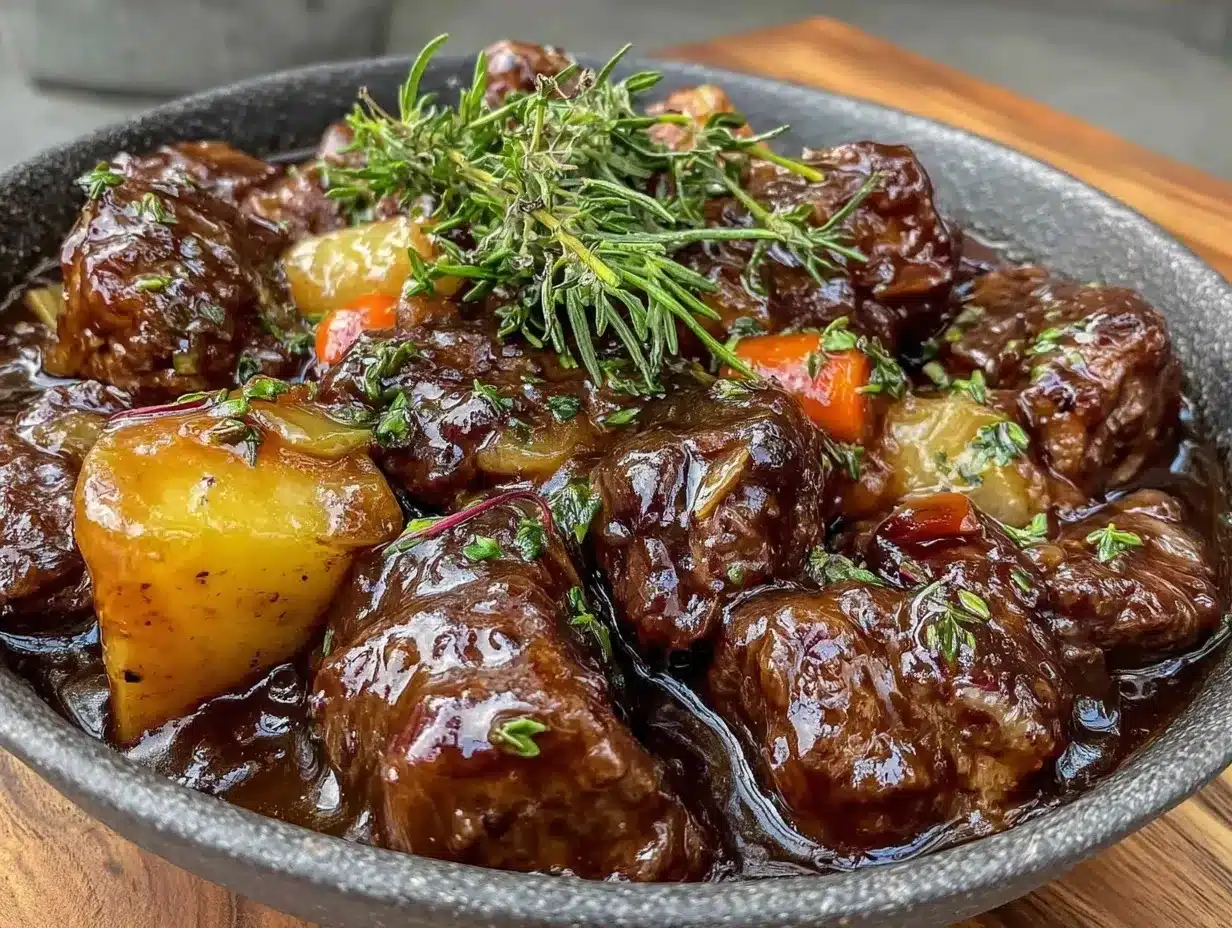
Use a dry red wine like Cabernet Sauvignon, Merlot, or Pinot Noir. You don’t need to buy the most expensive bottle, but don’t use anything you wouldn’t drink. The alcohol cooks off, leaving behind rich, fruity notes that enhance the beef. If you prefer not to use alcohol, substitute with beef broth plus a tablespoon of balsamic vinegar for acidity.
Yellow Onion (1 large / approx. 200g)
Chopped roughly. The onion sweetens as it cooks, balancing the savory beef. I don’t stress about uniform pieces here; rustic chunks add more texture to the final dish.
Garlic (4 cloves / 2 tbsp minced)
Fresh garlic is non-negotiable. Jarred garlic has a metallic taste that clashes with the wine. Mince it finely so it disperses throughout the stew. If you’re having a lazy night, press it instead of mincing—it’s faster and just as effective.
Carrots (3 large / 450g)
Peel and chop into 1-inch chunks. Carrots add natural sweetness and a pop of color. They hold up well to long cooking without turning to mush. If you’re not a fan of carrots, celery root or parsnips work as substitutes.
Potatoes (1.5 lbs / 700g)
Yukon Gold or Russet potatoes are best. Yukon Golds stay creamy and don’t fall apart as easily. Cut them into similar-sized chunks as the carrots so they cook evenly. Peeling is optional—I leave the skin on for extra fiber and rustic charm, but wash them thoroughly first.
Beef Broth (1 cup / 240ml)
Use a low-sodium broth so you can control the saltiness. The wine and soy sauce (see below) add salt, so starting low gives you more control. Homemade broth is ideal, but a good quality store-bought carton works fine.
Tomato Paste (2 tbsp)
This adds umami and richness. It’s not about tasting tomato; it’s about deepening the color and flavor of the beef. Cook it in the pot for a minute before adding liquids to caramelize it slightly.
Thyme and Bay Leaves
Fresh thyme is best, but dried works too. Use 1 tablespoon fresh or 1 teaspoon dried. Add 2 bay leaves. Remove the bay leaves before eating—they’re for flavor, not texture.
Tomato Paste (2 tbsp)
This adds umami and richness. It’s not about tasting tomato; it’s about deepening the color and flavor of the beef. Cook it in the pot for a minute before adding liquids to caramelize it slightly.
Thyme and Bay Leaves
Fresh thyme is best, but dried works too. Use 1 tablespoon fresh or 1 teaspoon dried. Add 2 bay leaves. Remove the bay leaves before eating—they’re for flavor, not texture.
Flour (2 tbsp)
Used to coat the beef. This helps sear the meat better and thickens the sauce later. Use all-purpose flour.
Soy Sauce (1 tbsp)
An secret weapon. It adds salt and a deep, savory richness that mimics the effect of long-term braising. It won’t make the stew taste Asian; it just makes it taste like stew.
Oil (2 tbsp)
Neutral oil like vegetable or canola. You’ll use this to sear the beef, which adds flavor. Olive oil works too, but its flavor might compete with the wine.
Tools Needed
You don’t need fancy equipment. Here’s what I use to make my Cozy Slow Cooker Beef Stew with Red Wine.
6-Quart Slow Cooker — This is the sweet spot. Too small, and the stew is crowded; too big, and it’s hard to manage. I use a basic programmable model. The brand doesn’t matter as much as the size.
Large Cutting Board — I use a sturdy wooden board. It gives me enough space to chop veggies without them rolling off. A plastic one works, but I find wooden ones are gentler on my knives.
Chef’s Knife — Sharp is better. Dull knives slip and cause accidents. I sharpen mine regularly, but even a decent store-bought knife will do if it’s sharp.
Measuring Spoons — For the herbs and soy sauce. Precision matters here for balance.
Spatula — A sturdy silicone spatula for scraping the bottom of the pot and stirring. It’s easier to clean than a wooden spoon.
Cooking Instructions
Let’s make this Cozy Slow Cooker Beef Stew with Red Wine. It’s simple, but there are a few tricks to get it right.
Step 1: Prep the Beef (5 minutes)
Cut the chuck roast into 1.5-inch cubes. Toss them in a bowl with 2 tablespoons of flour, salt, and pepper until evenly coated. The flour helps create a crust when seared and thickens the sauce later.
Step 2: Sear the Beef (10 minutes)
Heat 2 tablespoons of oil in a large skillet over medium-high heat. Add the beef in batches. Don’t overcrowd the pan, or the meat will steam instead of sear. You want a deep brown crust on all sides. This step adds flavor that you can’t get from just boiling. Remove beef to a plate.
Step 3: Sauté Aromatics (3 minutes)
In the same skillet, add the chopped onion. Cook until softened, about 3 minutes. Add the garlic and cook for 1 more minute until fragrant. Do not let the garlic brown—it turns bitter quickly. Scrape up any browned bits from the bottom of the pan; that’s flavor gold.
Step 4: Build the Stew (5 minutes)
Transfer the beef, onions, and garlic to the slow cooker. Add the chopped carrots and potatoes. In a measuring cup, whisk together the red wine, beef broth, tomato paste, soy sauce, and thyme. Pour this mixture over the vegetables and beef. Stir gently to combine. Tuck the bay leaves into the stew.
Step 5: Slow Cook (6-8 hours)
Cover and cook on Low for 6-8 hours. The low and slow method is key. It breaks down the tough connective tissue in the beef, making it tender. Avoid cooking on High unless you’re in a rush—it won’t be as tender. After 6 hours, check the beef. It should be fork-tender.
Step 6: Thicken the Sauce (Optional, 5 minutes)
If you prefer a thicker sauce, mix 1 tablespoon of cornstarch with 1 tablespoon of cold water to make a slurry. Stir this into the stew during the last 30 minutes of cooking. It will thicken as it heats through. If you don’t mind a thinner broth, skip this step.
Total Time: 10 minutes prep, 6-8 hours cooking. It’s perfect for making while you’re away or relaxing at home.
Expert Tips for the Best Stew
Here’s everything I learned from making this too many times. These tips will save you from common mistakes.
Don’t Skip the Sear
I know it’s extra work. But searing the beef creates Maillard reaction flavors that depth the stew significantly. I once skipped it to save time, and the stew tasted flat. Never again. The extra 10 minutes is worth it.
Use a Dry Red Wine
Do not use a sweet wine or a cooking wine with added salt. A dry Cabernet or Merlot balances the savory beef. If you’re unsure, ask your wine shop assistant for a “cooking-friendly” dry red. I’ve used a cheap bottle from the grocery store that worked perfectly.
Don’t Overcrowd the Slow Cooker
Ensure your veggies are cut into similar sizes. If some are huge and some are tiny, the tiny ones will turn to mush before the big ones are tender. Uniformity ensures even cooking.
Adjust Seasoning at the End
After cooking, taste the stew. The flavors concentrate over time. You might need a pinch more salt or a splash of vinegar to brighten it up. I often add a teaspoon of lemon juice or balsamic vinegar right before serving to lift the heavy flavors.
Rest Before Serving
Let the stew sit for 10-15 minutes after turning off the slow cooker. This allows the flavors to meld and the sauce to settle. It’s a small step that makes a big difference in texture and taste.
Recipe Variations
Once you’ve nailed the basic version, here’s how to mix it up. The Cozy Slow Cooker Beef Stew with Red Wine is a canvas.
Vegetable Boost
Add 1 cup of chopped mushrooms or 1 cup of frozen peas in the last hour of cooking. Mushrooms add an earthy, meaty texture that complements the beef. Peas add a sweet pop of color and freshness.
Spicy Kick
Add 1 teaspoon of red pepper flakes or a diced jalapeño with the onions. It adds a gentle heat that warms you from the inside out. Great for cold nights.
Herb Swap
Replace thyme with rosemary. Rosemary is stronger, so use half the amount. It gives a piney, aromatic note that pairs well with beef. It’s a classic combination for a reason.
Gluten-Free
Use gluten-free beef broth and ensure your soy sauce is tamari. The flour coating can be substituted with cornstarch or arrowroot powder. The rest of the recipe is naturally gluten-free.
Dairy-Free
This recipe is already dairy-free. Serve it with crusty bread or over mashed potatoes made with olive oil instead of butter for a fully plant-based meal.
Serving & Storage
Serving
I serve this Cozy Slow Cooker Beef Stew with Red Wine in wide, shallow bowls. It looks inviting and keeps the heat in. Pair it with crusty sourdough bread for dipping, or serve it over creamy mashed potatoes or buttered egg noodles. A simple green salad with a vinaigrette cuts through the richness of the stew.
Storage
Let the stew cool completely before storing. It keeps in the refrigerator for up to 4 days. The flavors actually improve after a day or two as they meld together.
It freezes well for up to 3 months. Portion it into individual containers for easy reheating. Thaw in the refrigerator overnight and reheat gently on the stove or in the microwave. The texture of the potatoes may soften slightly upon freezing, but the flavor remains excellent.
Reheating
Reheat on low heat on the stove, adding a splash of broth or water if it’s too thick. Avoid boiling, as it can make the beef tough.
Nutrition Information
I’m not a nutritionist, but here’s the breakdown per serving (approx. 1.5 cups):
| Nutrient | Amount |
|---|---|
| Calories | 450 |
| Protein | 35g |
| Carbohydrates | 30g |
| Fiber | 5g |
| Fat | 18g |
| Sodium | 600mg |
My Take: This is comfort food. It’s rich and satisfying. It’s not a diet food, but it’s made with whole ingredients like beef, vegetables, and wine. It’s better than takeout, and you know exactly what’s in it. Enjoy it mindfully as a treat for yourself.
Final Thoughts
This Cozy Slow Cooker Beef Stew with Red Wine is more than a recipe. It’s a ritual. It’s the moment you choose to slow down, to nourish your body, and to acknowledge that you deserve a warm, hearty meal after a hard day. I hope it brings you the same peace and comfort it has brought me. Make it when you need it most. Drop a comment below if you try it—I love hearing how it turns out in your kitchen. Happy cooking!
FAQs
Can I use a different cut of beef?
Chuck roast is ideal because of its fat content, which keeps it moist during long cooking. You can use shoulder roast, but avoid lean cuts like sirloin or round, as they will become dry and tough.
Can I make this in an Instant Pot?
Yes! Use the “Sauté” function to brown the beef, then add all ingredients. Pressure cook on High for 35 minutes, then natural release for 15 minutes. The texture will be slightly different but still delicious.
Is the red wine necessary?
It’s not strictly necessary, but it adds a depth of flavor that broth alone can’t achieve. If you don’t drink alcohol, use extra beef broth with a splash of balsamic vinegar or red wine vinegar for acidity.
Can I double the recipe?
Yes, but ensure your slow cooker is large enough (at least 6 quarts). Do not overfill the pot beyond the 2/3 mark. Cooking time may increase slightly if doubling.
Why is my stew too thin?
If you prefer a thicker sauce, use a cornstarch slurry (1 tbsp cornstarch + 1 tbsp water) in the last 30 minutes of cooking. Alternatively, simmer the stew uncovered for the last hour to reduce the liquid.
Can I prep this ahead of time?
Yes! Chop the vegetables and sear the beef the night before. Store them in airtight containers in the fridge. In the morning, just dump everything into the slow cooker and start it. It’s a great option for busy mornings.
Does this go well with other dishes?
It pairs beautifully with fall spiced apple cider for a cozy autumn meal. It also complements fall cinnamon pumpkin cake roll if you want a sweet finish to your self-care evening.
Pin This Recipe!
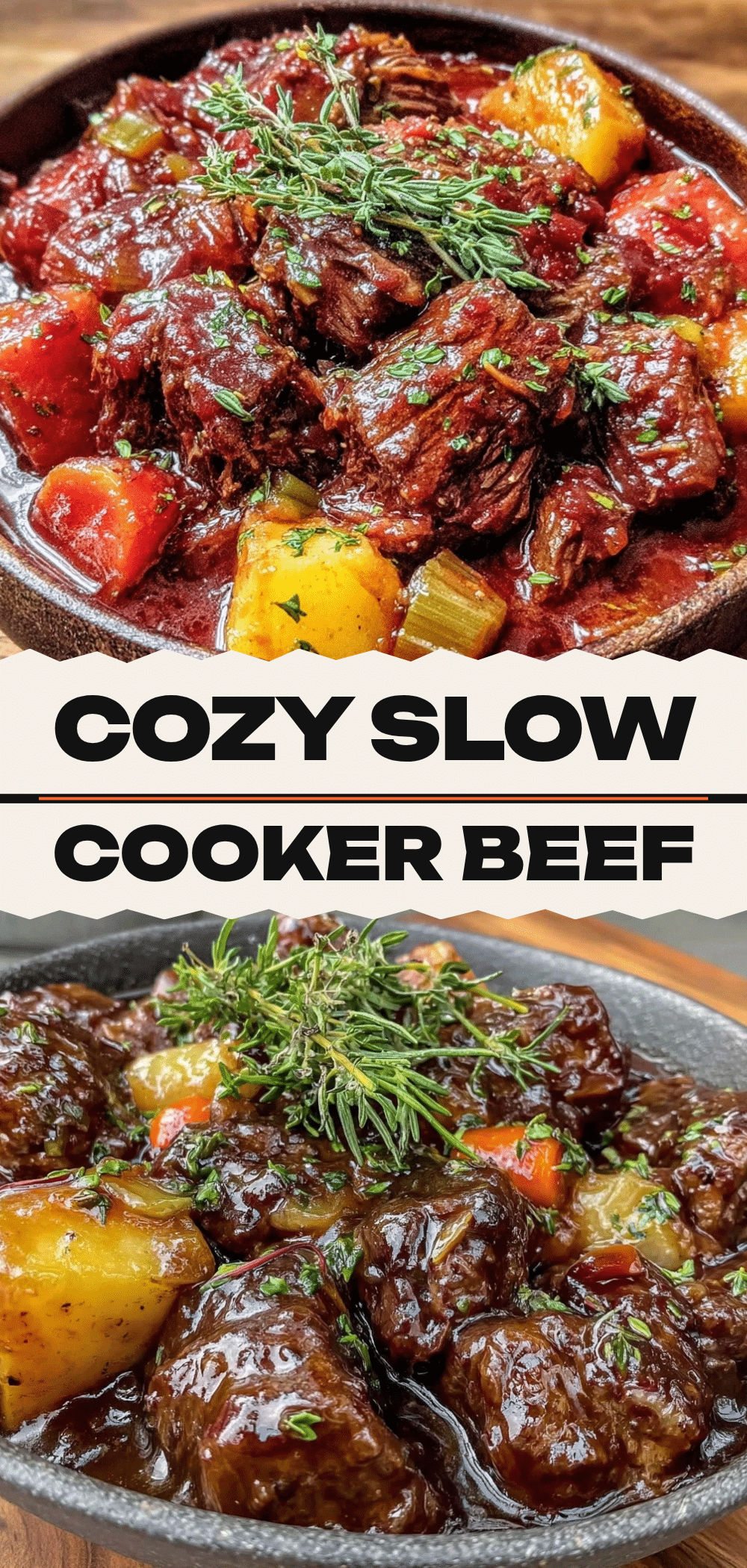
Cozy Slow Cooker Beef Stew with Red Wine
- Total Time: 6 hours 10 minutes
- Yield: 4 servings 1x
Description
A comforting, slow-cooked beef stew made with chuck roast, red wine, and root vegetables. This ‘set it and forget it’ meal is perfect for self-care, offering tender meat and rich flavors with minimal effort.
Ingredients
- 2 lbs beef chuck roast, cut into 1.5-inch cubes
- 2 tbsp all-purpose flour
- Salt and pepper to taste
- 2 tbsp neutral oil (vegetable or canola)
- 1 large yellow onion, chopped roughly
- 4 cloves garlic, minced
- 3 large carrots, peeled and chopped into 1-inch chunks
- 1.5 lbs potatoes (Yukon Gold or Russet), cut into chunks
- 1 cup dry red wine (Cabernet or Merlot)
- 1 cup low-sodium beef broth
- 2 tbsp tomato paste
- 1 tbsp soy sauce
- 1 tbsp fresh thyme (or 1 tsp dried)
- 2 bay leaves
- 1 tbsp cornstarch mixed with 1 tbsp cold water (optional, for thickening)
Instructions
- Cut the chuck roast into 1.5-inch cubes and toss with flour, salt, and pepper until evenly coated.
- Heat oil in a large skillet over medium-high heat. Sear the beef in batches until a deep brown crust forms on all sides. Remove beef to a plate.
- In the same skillet, sauté the chopped onion until softened (about 3 minutes). Add garlic and cook for 1 minute until fragrant. Scrape up browned bits from the pan.
- Transfer the seared beef, onions, and garlic to a 6-quart slow cooker. Add the chopped carrots and potatoes.
- In a measuring cup, whisk together the red wine, beef broth, tomato paste, soy sauce, and thyme. Pour this mixture over the ingredients in the slow cooker. Stir gently to combine and tuck in the bay leaves.
- Cover and cook on Low for 6-8 hours, or until the beef is fork-tender.
- If a thicker sauce is desired, stir in the cornstarch slurry during the last 30 minutes of cooking.
- Remove bay leaves. Let the stew rest for 10-15 minutes before serving to allow flavors to meld.
- Serve in wide bowls with crusty bread, mashed potatoes, or egg noodles.
Notes
Do not skip searing the beef as it adds significant depth of flavor. Use a dry red wine you would enjoy drinking. If using an Instant Pot, pressure cook on High for 35 minutes with a 15-minute natural release. The stew tastes even better the next day as flavors meld.
- Prep Time: 10 minutes
- Cook Time: 6-8 hours
- Category: Main Course
- Cuisine: American
Nutrition
- Serving Size: Approx. 1.5 cups
- Calories: 450
- Sodium: 600
- Fat: 18
- Carbohydrates: 30
- Fiber: 5
- Protein: 35
Keywords: slow cooker beef stew, red wine stew, comfort food, self-care meal, chuck roast recipe, cozy dinner, easy stew


