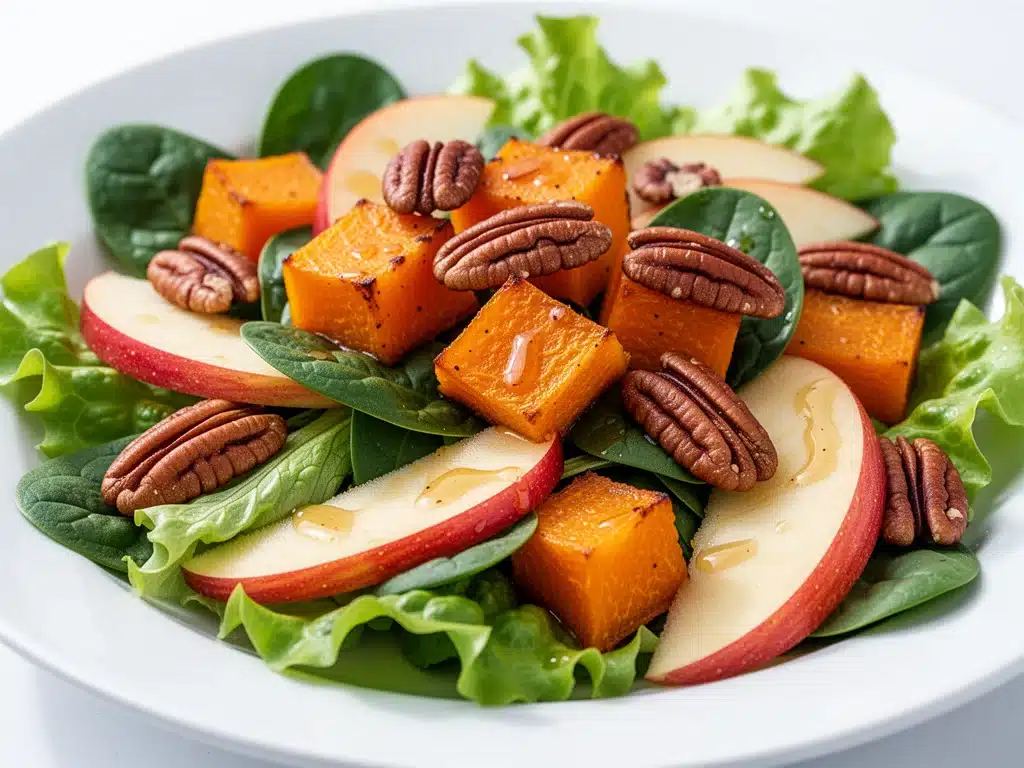
Last November, I was standing in the breakroom of my old office, staring at a sad, limp salad from the grocery store cafe. It had been sitting under a heat lamp for two hours. The greens were wilted, the croutons were soggy, and honestly, it tasted like regret. I took one bite, threw the rest in the trash, and spent the next three hours fighting a sugar crash that made me want to crawl under my desk.
That was the moment I realized I needed a change. I didn’t want to spend $15 on a lunch that made me feel worse than if I’d just skipped it. And I certainly didn’t want to spend my evenings cooking elaborate dinners only to have nothing left for lunch the next day. I needed something that tasted like autumn, felt like a hug, and actually kept me energized.
That’s when I started experimenting with the autumn harvest salad. It started as a way to use up the last of my farmers market squash and that bag of apples I’d forgotten about in the fridge. But after making it for the third time, my coworkers started asking what smelled so good in my office kitchen. Now, this autumn harvest salad is my go-to cozy fall lunch idea. It’s warm, it’s hearty, and it tastes like the season itself.
I’ve tweaked this recipe at least a dozen times over the last five years. I’ve tried different nuts, swapped out cheeses, and even experimented with hot vs. cold dressing. What I’ve landed on is the perfect balance of sweet, savory, and crunchy. It’s not just a salad; it’s a meal that makes you look forward to 12:30 PM instead of dreading it. If you’re tired of the same old sandwich routine, trust me on this one.
Why You’ll Love This Autumn Harvest Salad
There’s a reason this autumn harvest salad has earned a permanent spot in my weekly rotation. It’s not just about the flavor (though the maple-dijon vinaigrette is dangerous stuff). It’s about how it fits into real life. Here’s why I keep coming back to it:
- It’s Actually Filling — Most salads leave you hungry an hour later. This one has roasted squash, chickpeas, and walnuts. I make this on Sunday, eat it for lunch Monday through Wednesday, and I’m never raiding the vending machine by 2 PM. It’s substantial without being heavy.
- Perfect for Meal Prep — The key to a great cold lunch is ingredients that don’t get soggy. Roasted vegetables hold their texture beautifully in the fridge. I assemble these in containers, and by day three, the flavors have melded together even better than day one. It’s meal prep that doesn’t feel like a chore.
- Uses Seasonal Ingredients — Fall is all about what’s abundant and cheap. Squash, apples, pears, and nuts are everywhere in October and November. This autumn harvest salad lets you shop the season without breaking the bank. Plus, supporting local farms makes the food taste better.
- Warm and Cold Versatility — You can eat this cold straight from the fridge, or toss the warm roasted veggies over the greens right before eating. I love the contrast of cold crisper greens with warm, roasted squash. It’s a texture game-changer.
- Customizable for Any Diet — It’s naturally vegetarian and gluten-free. If you want to add chicken or turkey, go for it. If you’re vegan, just skip the feta or swap it for a vegan alternative. It’s a blank canvas that works for everyone at the table.
This is my answer to “what’s for lunch?” when I want something that feels special but takes zero effort. It’s cozy, it’s colorful, and it makes the shorter, grayer days feel a little brighter.
Ingredients You’ll Need for the Best Autumn Harvest Salad
Here’s the thing about this autumn harvest salad: it looks complicated because it’s so colorful, but the ingredient list is surprisingly short. You’re mostly working with pantry staples and seasonal produce. I’m particular about a few things here, so let’s break down what you need and why.
For the Roasted Veggies & Base
Butternut squash (1 medium, cubed / about 500g) — This is the star. Look for one that feels heavy for its size and has a dull, matte skin. I prefer roasting it because it brings out the natural sweetness. Acorn squash works too, but butternut is easier to cube and peel.
Brussels sprouts (2 cups, halved / about 200g) — Don’t knock them until you’ve roasted them! Toss them in the oven with the squash, and they get crispy and nutty. No more bitter, boiled Brussels. This changes everything.
Mixed greens (6 cups / 150g) — I use a mix of baby kale and arugula. Kale holds up better in the fridge than spinach, and arugula adds a nice peppery bite to balance the sweet apples. If you’re sensitive to bitter greens, spring mix works too.
Apples (2 medium, sliced / about 300g) — Honeycrisp or Fuji are my go-tos. They hold their shape when raw and don’t turn mushy. Avoid Red Delicious; they’re too mealy for a fresh salad.
For the Crunch & Creaminess
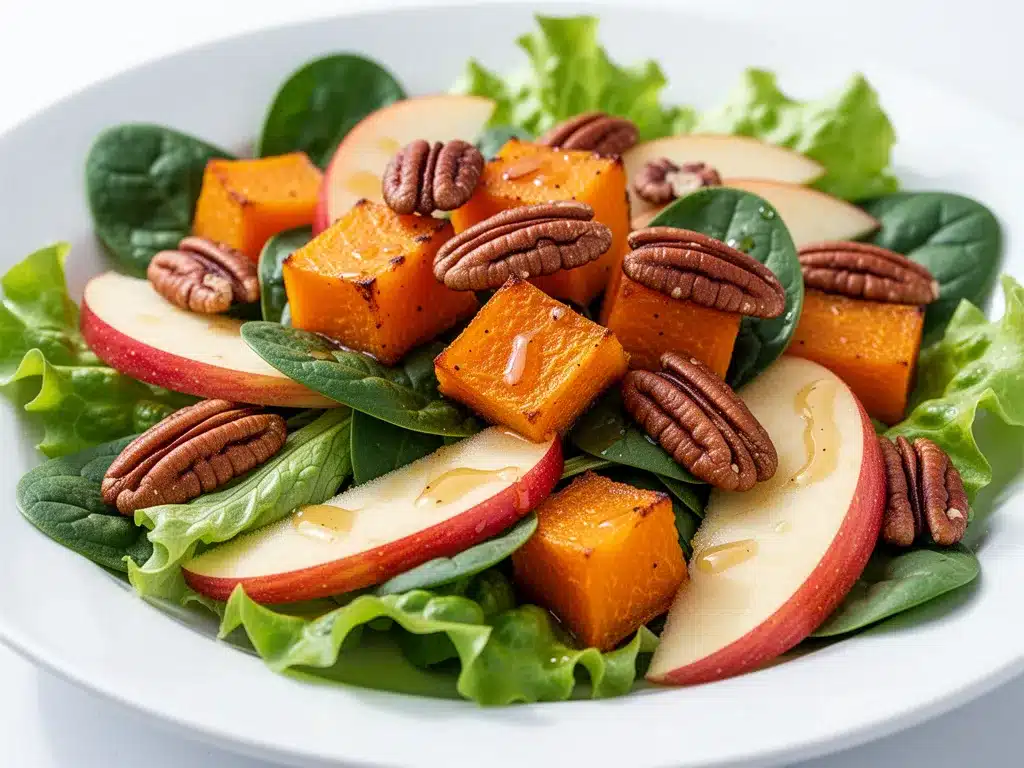
Walnuts (½ cup / 60g) — Toasted walnuts are non-negotiable. Raw walnuts are fine, but toasting them in a dry pan for 3-4 minutes releases their oils and makes them way more flavorful. Pecans work too if you prefer them.
Feta cheese (½ cup, crumbled / 60g) — The saltiness of feta cuts through the sweet squash and maple dressing. Goat cheese is a softer alternative, but feta has that nice crumbly texture. For a dairy-free option, skip it or use a vegan feta.
Dried cranberries (¼ cup / 30g) — Just a handful. They add bursts of tart sweetness. If you’re not a fan of cranberries, dried cherries or apricots work well too.
For the Maple-Dijon Vinaigrette
Extra virgin olive oil (3 tablespoons / 45ml) — Use a good quality oil here. It’s the base of the dressing, so it should taste good on its own.
Apple cider vinegar (2 tablespoons / 30ml) — This ties into the autumn theme perfectly. It adds a fruity acidity that pairs beautifully with the squash. Balsamic works too, but cider vinegar is more traditional for this flavor profile.
Dijon mustard (1 tablespoon) — It emulsifies the dressing and adds a tangy kick. Don’t skip it; it’s the bridge between the sweet and savory.
Maple syrup (1 tablespoon) — Real maple syrup, not pancake syrup. A little goes a long way. It balances the acidity of the vinegar.
Garlic (1 clove, minced) — Fresh only. Jarred garlic tastes metallic in a cold dressing.
Salt and black pepper — To taste. I usually use about ½ teaspoon of kosher salt.
Equipment Needed
You don’t need fancy gadgets for this. Here’s what I actually use in my kitchen:
Baking sheet — A large rimmed baking sheet is essential for roasting the squash and Brussels sprouts. I like a dark sheet because it promotes browning. Parchment paper makes cleanup a breeze.
Large mixing bowl — For tossing the salad and whisking the dressing. Any big bowl works.
Small whisk — For emulsifying the vinaigrette. You can use a fork in a pinch, but a whisk makes it creamy.
Sharp knife and cutting board — For prepping the squash and apples. Roasting the squash makes it softer, but you still need a good knife to cube it raw.
Small skillet — For toasting the walnuts. This takes 3 minutes and is worth every second.
Salad spinner (optional) — If you wash your greens, a spinner gets them dry. Wet greens = watery dressing. I always spin mine.
How to Make It: Step-by-Step
Alright, let’s make this autumn harvest salad! It’s easier than it looks. I’m walking you through exactly how I do it, including the little tricks that make it restaurant-quality.
Step 1: Roast the Vegetables (25-30 minutes)
Preheat your oven to 400°F (200°C). Line a large baking sheet with parchment paper. Cube the butternut squash into 1-inch pieces. Halve the Brussels sprouts. Toss them together on the baking sheet with 2 tablespoons of olive oil, salt, and pepper. Spread them out in a single layer—don’t crowd them, or they’ll steam instead of roast. Roast for 20-25 minutes, flipping halfway through, until the squash is tender and the Brussels are crispy at the edges. Let them cool completely. This is crucial; warm veggies will wilt the greens if you assemble too early.
Step 2: Toast the Walnuts (3 minutes)
While the veggies roast, heat a dry skillet over medium heat. Add the walnuts and toast for 2-3 minutes, shaking the pan frequently. They’re done when they’re fragrant and slightly darkened. Watch them closely—they go from perfect to burnt in seconds. Transfer to a plate to cool, then roughly chop them.
Step 3: Make the Maple-Dijon Vinaigrette (5 minutes)
In a small bowl, whisk together the olive oil, apple cider vinegar, Dijon mustard, maple syrup, minced garlic, salt, and pepper. Whisk vigorously until the dressing looks creamy and emulsified. Taste it. It should be tangy, slightly sweet, and savory. If it’s too sour, add a touch more maple syrup. If it’s too sweet, add a splash more vinegar.
Step 4: Prep the Fresh Ingredients
Slice the apples into thin wedges. If you’re worried about browning, toss them in a little lemon juice, though it’s not strictly necessary if you’re eating within a few hours. Crumble the feta cheese. If your dried cranberries are large, chop them in half.
Step 5: Assemble the Salad
In a large bowl, toss the mixed greens with half of the dressing. You want them coated but not swimming. Divide the dressed greens among serving bowls or meal prep containers. Top with the cooled roasted squash and Brussels sprouts. Arrange the apple slices, toasted walnuts, dried cranberries, and crumbled feta on top. Drizzle with the remaining dressing just before serving if you want it fresh, or toss everything together if you’re prepping for the week (but save the apples for last to keep them crisp).
Total Time: About 40 minutes (10 minutes active, 30 minutes mostly hands-off roasting)
Expert Tips & Tricks
Here’s everything I’ve learned from making this autumn harvest salad dozens of times. These tips will save you from my early mistakes.
Don’t Skip the Cooling Step
This is the #1 mistake people make. If you put hot roasted veggies on cold greens, you’ll wilt the salad. I always roast the veggies ahead of time and let them come to room temperature. If I’m in a rush, I spread them on a baking sheet and put them in the fridge for 10 minutes to speed up the process.
Toast Your Nuts
I cannot stress this enough. Raw walnuts are fine, but toasted walnuts are a game-changer. The heat releases the oils and adds a depth of flavor that raw nuts just don’t have. It’s a 3-minute step that elevates the entire dish.
Emulsify Your Dressing
When whisking the vinaigrette, add the oil slowly at first, then whisk faster. You want the oil and vinegar to blend into a creamy, uniform mixture. If the dressing looks separated when you pour it, it just means you didn’t whisk it long enough. A little emulsification helps it cling to the greens.
Keep the Apples Crisp
Apples can get soggy if they sit in dressing too long. If you’re meal prepping for the week, store the apples in a separate small container or bag. Add them to your salad right before you eat. They’ll stay crisp and fresh for days.
Common Mistakes (and how to avoid them)
Mistake: Veggies are mushy.
Fix: You crowded the pan. Give the squash and Brussels space. If they’re touching too much, they’ll steam. Use two baking sheets if needed.
Mistake: Dressing is too sweet.
Fix: Maple syrup varies in sweetness. Taste your dressing before assembling. If it’s too sweet, add more vinegar or a pinch of salt to balance it.
Mistake: Salad is watery.
Fix: Your greens weren’t dry enough. Always spin or pat dry your greens after washing. Wet greens dilute the dressing and make the salad slimy.
Variations & Substitutions
Once you’ve nailed the basic version, here’s how you can mix it up. I’ve tried all of these, and they’re all winners.
Protein-Packed Version
Add 1-2 cups of shredded rotisserie chicken, grilled steak strips, or baked tofu. I love adding crispy bacon bits too, though it’s not vegetarian. The protein makes it even more filling.
Vegan Autumn Harvest Salad
Skip the feta cheese. Use a vegan feta or just leave it out. Swap the maple syrup for agave if you prefer (though maple is better). Add roasted chickpeas for extra crunch and protein. It’s just as satisfying without the dairy.
Pear and Gorgonzola Swap
Replace the apples with sliced pears and the feta with crumbled Gorgonzola. Pears are softer and sweeter, and Gorgonzola is stronger and creamier than feta. It’s a more decadent version, perfect for a weekend dinner.
Gluten-Free
This recipe is naturally gluten-free! Just double-check your Dijon mustard and maple syrup to ensure they don’t have hidden gluten (rare, but possible in some brands). Serve with gluten-free croutons if you want extra crunch.
Different Nuts
Walnuts are traditional, but pecans, almonds, or hazelnuts work beautifully. Hazelnuts add a nice earthy flavor. Just toast them and chop them roughly.
Serving & Storage
How to Serve
I usually serve this autumn harvest salad in wide, shallow bowls. It looks beautiful with the colors of fall—orange squash, green apples, red cranberries, and brown nuts. It’s photogenic enough for Instagram but tasty enough for your family.
Side Dishes: If you’re making this for dinner, pair it with crusty bread or warm rolls. A simple tomato cucumber salad works too if you want something lighter. For lunch, this is usually a complete meal on its own.
Wine Pairing: Not a wine expert, but my wine-snob friend says a crisp Pinot Grigio or a light-bodied Pinot Noir goes great with this. The acidity cuts through the richness of the squash and cheese.
Storage Instructions
Refrigerator: Store the dressed greens, roasted veggies, nuts, and cranberries in separate airtight containers. The apples can go with the greens or separate. This keeps everything fresh for up to 4 days. The roasted veggies last up to 5 days.
Reheating: You can eat this cold, but if you want to reheat the veggies, microwave them for 1-2 minutes. Let them cool slightly before adding to the greens. Don’t reheat the entire salad together; the greens will wilt.
Freezing: Do not freeze this salad. The greens and apples will turn mushy when thawed. The roasted veggies can be frozen, but the texture changes. Make it fresh for the best results.
Pro Tip: If you’re meal prepping, keep the dressing in a small jar. Shake it up and pour it over your salad right before eating. This prevents sogginess and keeps the salad crisp all week.
Nutrition Information
I’m not a nutritionist, but here’s the breakdown if you’re tracking. This is per serving (based on 4 servings).
Per Serving:
Calories: 380
Protein: 12g
Carbs: 42g
Fiber: 8g
Sugar: 18g
Fat: 20g
Saturated Fat: 4g
Cholesterol: 15mg
Sodium: 350mg
What’s Good:
High in fiber from the squash, greens, and nuts. Good source of Vitamin A from the squash. The walnuts provide healthy omega-3 fatty acids. It’s a nutrient-dense meal that keeps you full.
What to Know:
Moderate in calories due to the nuts and cheese. The sugar comes from the apples, cranberries, and maple syrup. If you’re watching sugar, reduce the cranberries and maple syrup.
My Take:
This is a healthy, balanced lunch. It’s not a diet food, but it’s far better than processed options. When I eat this, I feel energized and satisfied. I usually pair it with a piece of fruit or a small cookie for dessert.
Final Thoughts
So that’s my autumn harvest salad! I’ve probably talked your ear off at this point, but when you make a recipe this often, you have a lot to say about it. This salad has saved my lunch routine more times than I can count. It’s my answer to “what’s for lunch?” when I want something that feels special, seasonal, and actually good for me.
Make it yours! Try different nuts, swap in your favorite apples, or add extra protein. The best recipes are the ones you adapt to your tastes. If you make this, drop a comment and let me know what you think! I love hearing how recipes turn out in your kitchen. And if something doesn’t work, tell me that too—I’m here to help troubleshoot.
Happy cooking! And I hope your kitchen smells half as good as mine does right now.
Frequently Asked Questions
Can I use different vegetables?
Absolutely! This is a flexible recipe. Roasted sweet potatoes work great instead of squash. Carrots or beets add nice color. Even roasted cauliflower fits the flavor profile. Just roast them until tender and crispy.
How long does this salad last in the fridge?
If stored properly in airtight containers, the roasted veggies last 4-5 days. The greens last 3-4 days. The apples should be eaten within 3 days for best texture. If you meal prep, keep the dressing separate to extend the life of the greens.
Can I make this ahead for a party?
Yes! Roast the veggies and make the dressing a day ahead. Assemble the salad 1-2 hours before serving. Add the fresh apples and nuts right before serving to keep them crisp. It’s a great make-ahead dish for fall gatherings.
Why did my dressing separate?
It’s normal for vinaigrettes to separate. Just whisk it again before pouring. If it doesn’t emulsify, you might need more mustard or whisk it longer. The mustard helps bind the oil and vinegar together.
Can I use canned squash?
You can, but fresh or frozen roasted squash tastes much better. Canned squash is often mushy and lacks the caramelized flavor of roasted squash. If you’re short on time, frozen cubed butternut squash works well—just roast it longer than fresh.
Is this salad good cold?
Yes! In fact, I think it tastes better cold the next day as the flavors meld. The roasted veggies are great at room temperature or cold. The greens stay crisp if kept dry. It’s a perfect cold lunch.
Pin This Recipe!
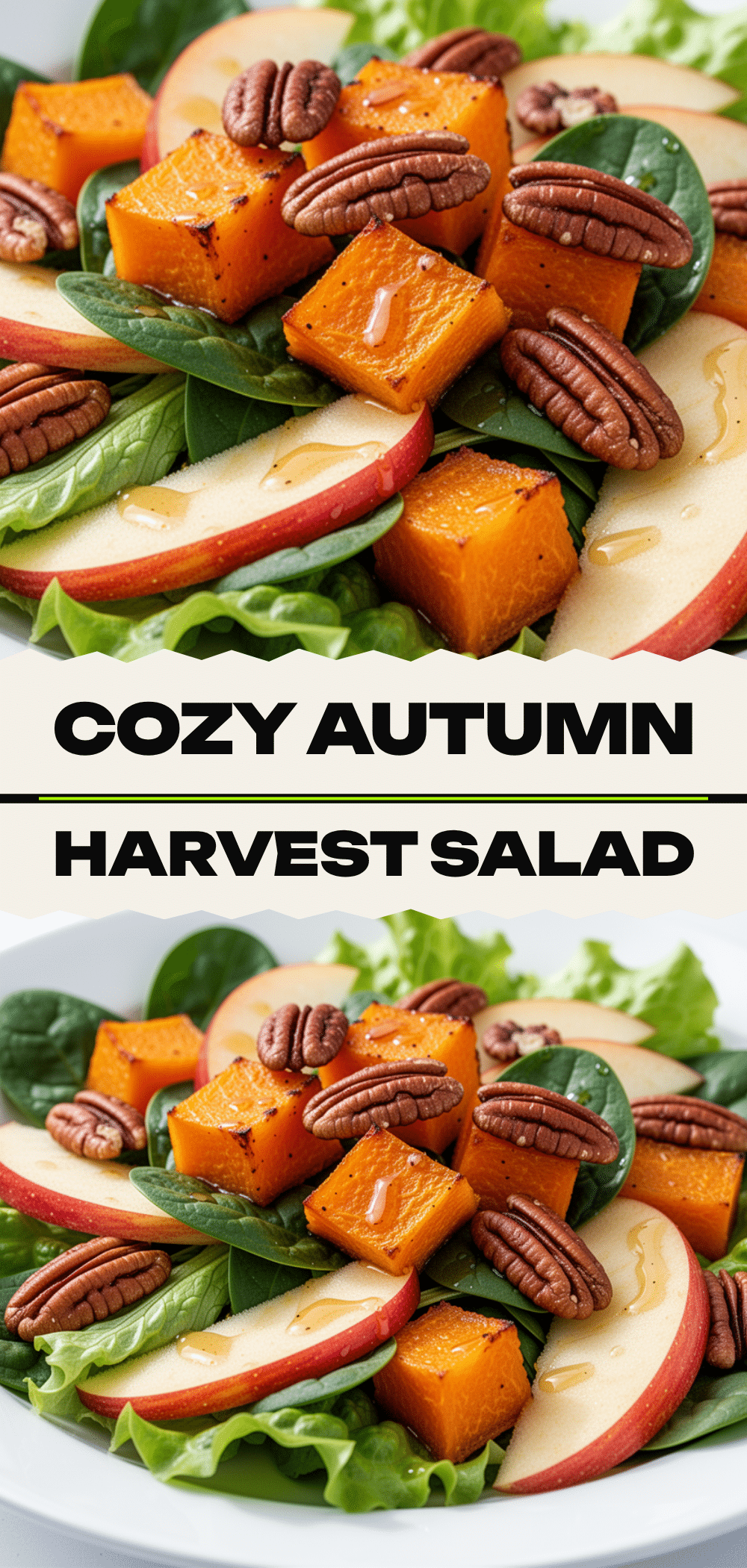
Autumn Harvest Salad
- Total Time: 40 minutes
- Yield: 4 servings 1x
Description
A hearty, cozy fall lunch featuring roasted butternut squash and Brussels sprouts, crisp apples, toasted walnuts, and a tangy maple-dijon vinaigrette. This vegetarian and gluten-free salad is perfect for meal prep and keeps you energized.
Ingredients
- 1 medium butternut squash (about 500g), cubed
- 2 cups Brussels sprouts (about 200g), halved
- 6 cups mixed greens (about 150g), such as baby kale and arugula
- 2 medium apples (about 300g), sliced (Honeycrisp or Fuji)
- 1/2 cup walnuts (60g), toasted and chopped
- 1/2 cup feta cheese (60g), crumbled
- 1/4 cup dried cranberries (30g)
- 3 tablespoons extra virgin olive oil (divided)
- 2 tablespoons apple cider vinegar
- 1 tablespoon Dijon mustard
- 1 tablespoon real maple syrup
- 1 clove garlic, minced
- Salt and black pepper to taste
Instructions
- Preheat oven to 400°F (200°C). Line a large baking sheet with parchment paper.
- Toss cubed squash and halved Brussels sprouts with 2 tablespoons olive oil, salt, and pepper. Spread in a single layer on the baking sheet.
- Roast vegetables for 20-25 minutes, flipping halfway, until squash is tender and Brussels sprouts are crispy. Let cool completely.
- While veggies roast, toast walnuts in a dry skillet over medium heat for 2-3 minutes until fragrant. Chop roughly.
- In a small bowl, whisk together olive oil, apple cider vinegar, Dijon mustard, maple syrup, minced garlic, salt, and pepper until emulsified.
- Slice apples into thin wedges.
- In a large bowl, toss mixed greens with half of the dressing.
- Divide dressed greens among bowls or containers. Top with cooled roasted vegetables, apple slices, walnuts, cranberries, and feta.
- Drizzle with remaining dressing just before serving.
Notes
Ensure roasted vegetables are completely cool before assembling to prevent wilting the greens. Toasting walnuts enhances their flavor significantly. For meal prep, store apples and dressing separately to maintain crispness. This salad is naturally gluten-free; check mustard and syrup labels if strict adherence is required.
- Prep Time: 10 minutes
- Cook Time: 30 minutes
- Category: Main Course
- Cuisine: American
Nutrition
- Serving Size: 1 bowl
- Calories: 380
- Sugar: 18
- Sodium: 350
- Fat: 20
- Saturated Fat: 4
- Carbohydrates: 42
- Fiber: 8
- Protein: 12
Keywords: autumn harvest salad, fall lunch ideas, roasted squash salad, meal prep salad, vegetarian lunch, gluten-free salad, maple dijon vinaigrette, healthy fall recipes


